How Keyword Ranking Factors Shape Your SEO Strategy
When I first started in SEO, the biggest mystery was why one page outranked another. Two sites could write about the same topic, use the same keywords, and yet one would sit on page one while the other vanished into the SERP abyss. Over time, I learned that the answer lies in keyword ranking factors - the signals Google uses to decide which content deserves the top spots. Understanding these factors is not just an academic exercise; it is the foundation of any serious organic search strategy.
Let me walk through what I have found matters most, based on years of hands-on work and the constant evolution of Google's algorithms.
What Are Keyword Ranking Factors?
At their simplest, keyword ranking factors are the criteria that search engines evaluate to determine where a page should appear for a given query. They cover everything from the words on the page to the way other sites link to it. But here is the thing: these factors are not static. What worked five years ago - like stuffing a keyword into every paragraph - can hurt you today. The real skill is knowing which factors carry weight now and how to balance them.
For example, I once worked on a site that had great content but terrible load times. No matter how well we optimized the on-page SEO, the pages could not hold a decent position because Core Web Vitals were dragging them down. That was a hard lesson in how technical SEO and user experience intersect with keyword ranking factors.
The Core Factors I See Working Today
Content Quality and Search Intent
Google's goal is to satisfy what a user actually wants. That sounds obvious, but it is easy to forget. I have rewritten entire articles just to shift them from informational to transactional intent, and seen rankings jump within weeks. Content quality is not just about being well-written. It means matching the depth and format the searcher expects. If someone queries "best running shoes for flat feet," they probably want a list with reviews, not a generic article about shoe anatomy.
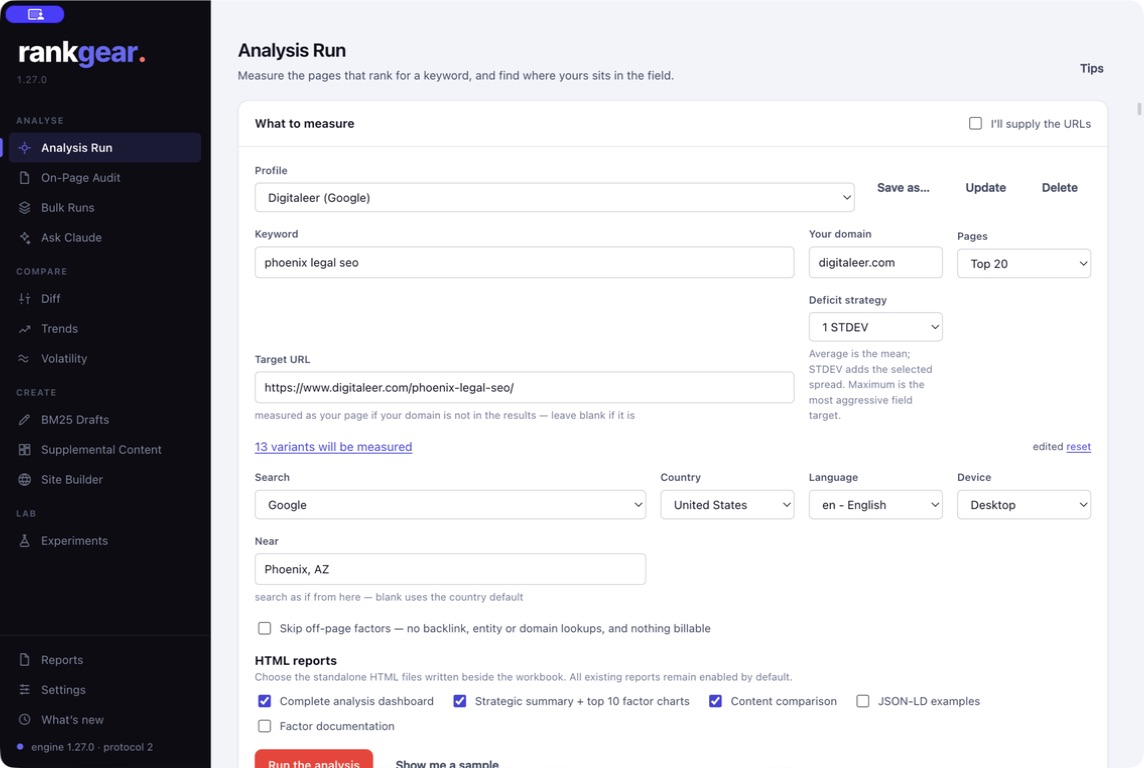
This is where keyword research comes in. You cannot guess intent; you have to analyze the SERP to see what currently ranks. The patterns there tell you what Google thinks the user wants. Ignoring search intent is like trying to sell ice on a winter day.
Backlinks and Authority Signals
Even in 2025, backlinks remain a major signal. But the quality has changed. A single link from a trusted site in your niche can outweigh dozens from low-quality directories. I have seen pages with fewer links outrank competitors simply because those links came from sources Google trusts. Domain Authority and Page Authority are not official Google metrics - they are third-party approximations - but they reflect the underlying reality that not all links are equal.
PageRank, the original algorithm that powered Google, still echoes through the system. Links are votes, but the voter's credibility matters more than the count.
User Experience and Technical Health
User experience has become a direct ranking signal. Core Web Vitals - metrics like loading speed, interactivity, and visual stability - are part of Google's evaluation. I have seen a site lose 30% of its organic traffic after a redesign that bloated page size. Mobile-first indexing means Google uses the mobile version of your page for ranking, so if your mobile experience is clunky, your desktop rankings suffer too.
Technical SEO covers things like crawlability, site structure, and schema markup. If Google cannot find your pages or understand them, no amount of good content will save you. This is often the hidden layer of keyword ranking factors that people overlook until it is too late.
Semantic Relevance and Entity Understanding
Gone are the days when matching a keyword exactly was enough. Google now understands concepts through methods related to Latent Semantic Indexing and TF-IDF - though those terms describe older approaches. The modern version is about entity recognition and topical depth. If you write about "apple," Google needs to know if you mean the fruit or the company. Using related terms naturally helps the algorithm understand your context.

I once optimized a page for "coffee brewing methods" and made sure to include terms like "water temperature," "grind size," and "extraction time." The page started ranking for dozens of related queries, not just the exact phrase. That is the power of semantic relevance.
EEAT and Trustworthiness
Google's EEAT framework - Experience, Expertise, Authoritativeness, Trustworthiness - is not a direct ranking factor in the same way as a backlink, but it influences how Google evaluates your content. For pages about health, finance, or safety, it is critical. But even for less sensitive topics, demonstrating expertise helps. I have found that including author bios, citing sources, and maintaining consistent accuracy all build the trust signals that Google looks for.
Putting It All Together
The mistake many people make is treating keyword ranking factors as a checklist. Do this, get that. But SEO is a system, not a list. A page with perfect on-page SEO but slow load times will underperform. A page with great backlinks but poor content will not hold its rank. The real art is balancing them.
Let me give you a concrete example. A few years ago, I worked on a site selling outdoor gear. Their biggest competitor had stronger Domain Authority and more backlinks. We could not out-link them, but we could out-content them. We focused on deep, helpful articles that matched exactly what searchers needed. We fixed technical issues like slow images and broken internal links. Within six months, we overtook the competitor for several high-volume terms. The lesson was clear: you do not need to win every factor, but you need to win the combination that matters for your specific query.
How to Use This Knowledge
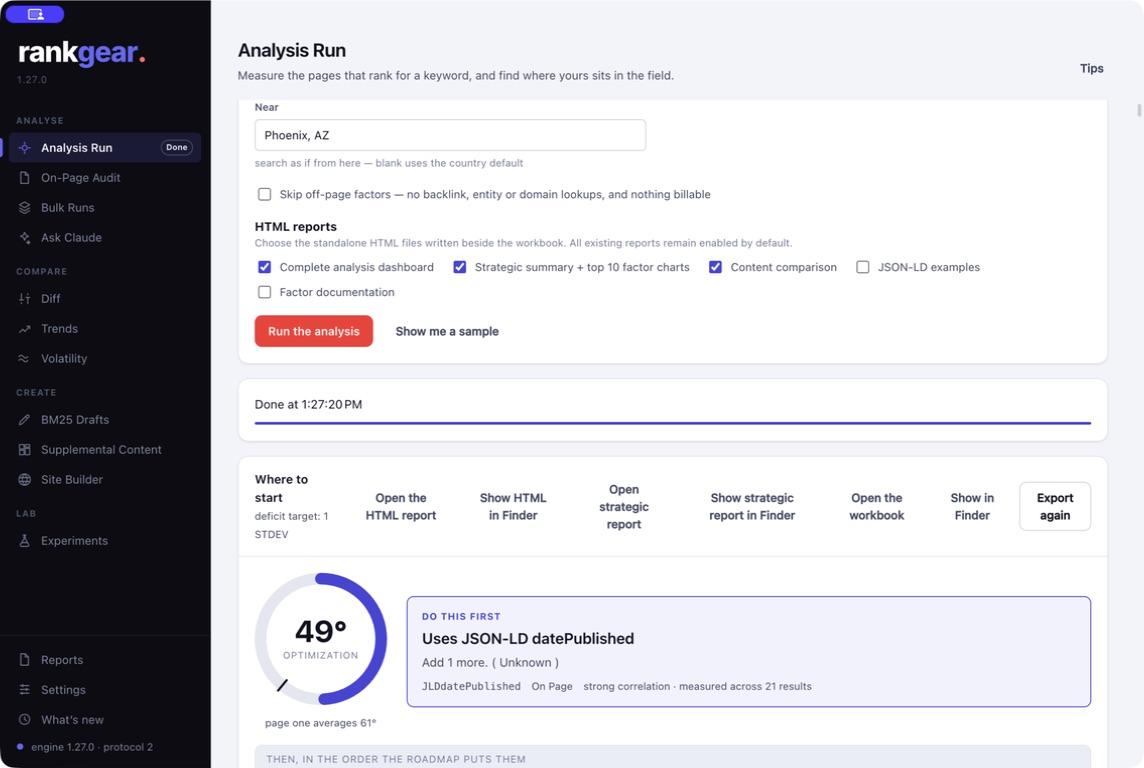
Start with keyword research to understand what people are searching for and what intent they have. Then audit your page for content quality, technical health, and backlink profile. Use tools that analyze keyword ranking factors for specific queries - that is exactly the kind of data that saves time. For instance, RankGear provides evidence-based optimization plans that show you exactly which factors to prioritize for a given keyword. Instead of guessing, you get a roadmap.
Do not try to optimize for everything at once. Pick the biggest gaps first. If your page loads slowly, fix that before building more links. If your content does not match search intent, rewrite it before chasing backlinks. The order matters.
Common Pitfalls to Avoid
- Focusing only on one factor, like backlinks, while ignoring user experience or technical SEO.
- Chasing keyword density instead of writing naturally. Google is smarter than a word counter.
- Ignoring mobile-first indexing. If your mobile page is slow or broken, your rankings will suffer everywhere.
- Assuming that what worked for one query will work for another. Each SERP is unique.
The Future of Ranking Factors
Google continues to refine how it evaluates pages. With advances in machine learning, the algorithm can understand content almost like a human reader. That means keyword ranking factors will keep shifting toward relevance, trust, and user satisfaction. The sites that adapt fastest will be the ones that treat SEO as a continuous process, not a one-time fix.
If you take one thing from this article, let it be this: keyword ranking factors are not a secret formula. They are a set of signals that, when aligned, tell Google your page deserves to rank. The work is in understanding your audience, building real authority, and never stopping the optimization cycle.
Ends · KEYWORDRANKINGFACTORSZONE